Coconut Oil Packaged in Easy to Measure Sticks
Coconut oil is no longer just a fad—it'due south a full on national obsession. You can't get inside x feet of the Internet earlier yous stumble beyond another commodity extolling its many virtues: It's delicious, it makes killer vegan baked goods, it may have some health benefits, and it even doubles equally an all-purpose beauty product.
Simply coconut oil's explosion in popularity has come with one major downside: At present grocery store shelves are packed with countless varieties of the stuff, all begetting a disruptive carousel of label claims. So which type should you buy for max diet and taste? Nosotros've got you covered. Here, four things you need to know before picking upward your adjacent jar:
Stick with a solid.
More From Prevention

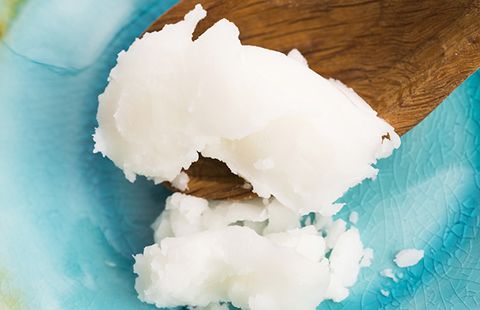
Most grocery stores carry coconut oil in both solid and liquid states—and fifty-fifty though they're both labeled as coconut oil, they're not exactly the same thing. All saturated fats (butter, lard, coconut oil) should be solid at room temperature. Those bottles of liquefied coconut oil take undergone extra processing, eliminating some of the fatty acids that are responsible for keeping it solid in the first place. That'due south a big no-no, says dietitian Jessica Levinson of Nutritioulicious, since the health benefits of coconut oil are linked to those fatty acids. Purchase solid kokosnoot oil for the same reason you purchase whole apples instead of applesauce: Information technology's 1 footstep closer to its most natural country.
Don't stress about organic.
Good news for the budget-conscious coconut aficionado: Coconuts aren't shown to accept meaning pesticide residues, and so it'southward not essential to purchase organic, explains Jackie Newgent, RD, culinary nutritionist and author of The All-Natural Diabetes Cookbook. The aforementioned goes for non-GMO label claims. There are currently no known genetically modified varieties of coconut, so don't pay actress for a brand flaunting not-GMO condition.
One exception: If you're buying refined coconut oil (more on that beneath), you lot might want to spring for organic, since organic production prohibits the use of an oil-extracting chemical called hexane. Try using this 100% organic, common cold-pressed kokosnoot oilto help create smooth, soft, happy skin.
More than: 25 Must-Haves For Your Clean-Eating Grocery List
Look out for these label terms.
Whenever possible, buy kokosnoot oil that's labeled as "unrefined," "extra virgin," and/or "cold pressed," merely avoid coconut oil that'south labeled equally "deodorized." Sticking to these guidelines ensures that you'll get oil subjected to the least amount of processing. "Unrefined coconut oil, also called extra virgin, is extracted from the fruit of fresh mature coconuts without the use of chemicals or high temperatures," Newgent says. "This ways it retains some nutrients that act as antioxidants."
Almost refined kokosnoot oil, on the other hand, is chemically extracted from dried kokosnoot meat that's been deodorized and bleached, so its antioxidant levels are depleted. (Though this isn't true of all brands: Some refined oils, especially organic ones, are actually extracted using steam. Bank check the manufacturer's website to be certain.) Refined coconut has its place in the kitchen—it'south got a college smoke point than unrefined, and then it's more versatile for cooking—but our experts still recommend unrefined, cold-pressed oil for near purposes. (Here are 14 cooking oils, ranked.)
Don't go crazy.
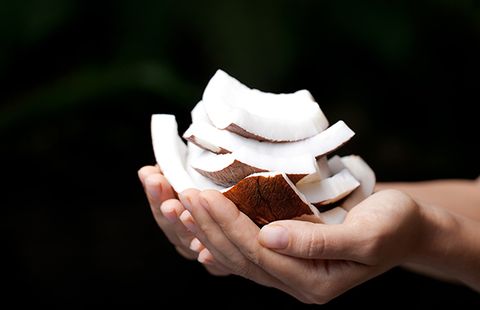
Plenty of online sources wax poetic well-nigh the supposed health benefits of coconut oil—but don't go too excited. Preliminary research does suggest that coconut oil's medium chain fatty acids could benefit our waistlines, because they're burned for energy, rather than stored every bit body fat. They've been shown to heighten "skillful" HDL cholesterol, too. And then again, they've also been shown to raise "bad" LDL cholesterol, Newgent explains. And those medium chain fat acids are a still a type of saturated fatty—the kind most nutrition pros say nosotros should limit.
It's not that coconut oil is some kind of unforgivable, disease-causing dietary evil—information technology's just that we don't know enough most information technology yet to say it should be the number one fatty source in our diets. "My feeling is that there's not enough research showing that we should be using coconut oil in identify of fats similar olive oil, avocado oil, or expeller-pressed canola oil that we know from years of research have heart health benefits," Levinson says.
Your best bet? Keep loading up on those proven healthy fatty sources (salmon, avocado, basics, olive oil) and use coconut oil less frequently. (As Levinson puts information technology: "Just don't eat information technology by the spoonful.") There'due south no need to eliminate kokosnoot oil—instead, merely remember information technology's not a magical wellness panacea.
Source: https://www.prevention.com/food-nutrition/healthy-eating/a20457075/coconut-oil-buying-information/
0 Response to "Coconut Oil Packaged in Easy to Measure Sticks"
Post a Comment